Why Do We Call Good Friday “Good”? A Different Way of Seeing?
Every year, the question returns: If Good Friday remembers the suffering and death of Jesus, what exactly makes it “good”?
A quick search offers the traditional answer—Christians believe Jesus’ death was a necessary sacrifice that brought salvation, forgiveness, and reconciliation. It is called “good” because it leads to the hope of Easter.
And yet, for some, that explanation raises a deeper and more uncomfortable question: Does a loving God really require the death of a son?
For me, that idea doesn’t sit easily. A God who gives life, who nurtures and loves unconditionally—would that same God desire suffering and death? It’s hard to reconcile those images.
This question isn’t just theological—it’s deeply human. I think of my own family. When my brother died in a car accident at sixteen, my parents certainly didn’t see any “necessity” in his death. They grieved the loss of a vibrant life, full of promise and goodness. Love does not will loss. Love longs for life.
So perhaps Good Friday invites us to look again—not at a required sacrifice, but at a profound tragedy.
It is the day we remember the death of a man who lived with a bold vision: a world where love, justice, and harmony were possible. Jesus spent his life embodying that vision—healing, forgiving, including, and proclaiming a deep and unwavering love of God. And for living that way, he was rejected.
“He came to his own, and his own did not accept him.” (John 1:11)
Good Friday, then, becomes not a celebration of suffering, but a moment of honest grief. A recognition of what happens when love confronts fear, when truth meets resistance, when goodness is misunderstood.
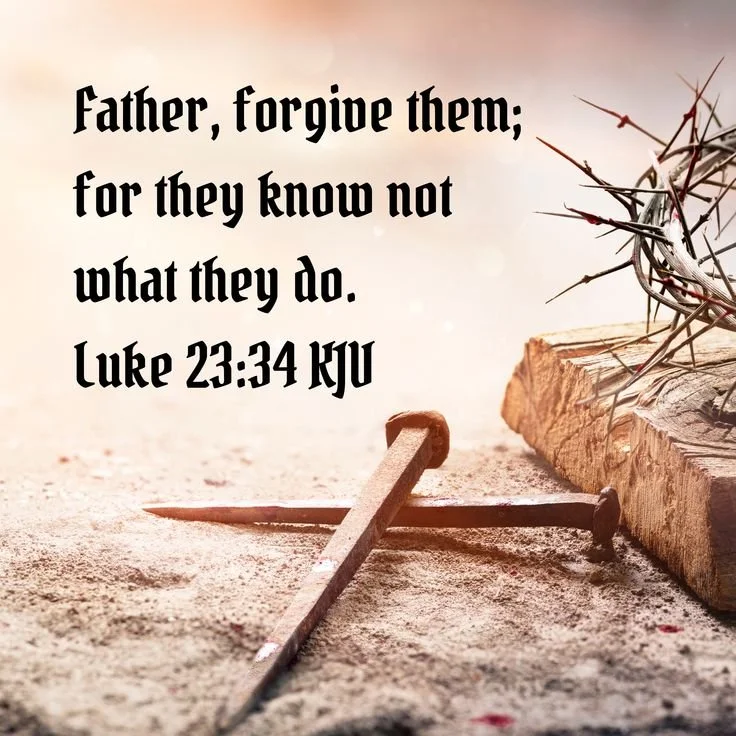
And yet—even in his dying, Jesus revealed something extraordinary. Not vengeance. Not despair. But forgiveness:
“Father, forgive them; they do not know what they are doing.”
“Today you will be with me in paradise.”
In these final words, we see the heart of His life’s message. Not that suffering is required—but that love remains possible, even in suffering. That forgiveness can rise, even in the face of violence.
Perhaps that is where the “good” begins to emerge.
Not in the death itself, but in the way He lived—and the way He died. A gentle life ended by violence. A life of love that refused to become hate, even at the end.
Good Friday may not be “good” in the way we often define it. But it is true. It reveals both the worst and the best of humanity. And it leaves us with a calling:
To live as He lived.
To love as He loved.
To become, in our own imperfect ways, embodiments of that same compassion and courage.
Maybe the only “necessity” in Good Friday is this stark contrast—between a life rooted in love and a death marked by violence.
And in that contrast, we are invited to choose again what kind of world we will help create.
-Sister Kathleen Lichti, CSJ
Image: Wim van 't Einde/Unsplash