
Good Friday

Good Friday: A Different Way of Seeing

Why Do We Call Good Friday “Good”? A Different Way of Seeing?

Every year, the question returns: If Good Friday remembers the suffering and death of Jesus, what exactly makes it “good”?

A quick search offers the traditional answer—Christians believe Jesus’ death was a necessary sacrifice that brought salvation, forgiveness, and reconciliation. It is called “good” because it leads to the hope of Easter.
And yet, for some, that explanation raises a deeper and more uncomfortable question: Does a loving God really require the death of a son?

For me, that idea doesn’t sit easily. A God who gives life, who nurtures and loves unconditionally—would that same God desire suffering and death? It’s hard to reconcile those images.

This question isn’t just theological—it’s deeply human. I think of my own family. When my brother died in a car accident at sixteen, my parents certainly didn’t see any “necessity” in his death. They grieved the loss of a vibrant life, full of promise and goodness. Love does not will loss. Love longs for life.

So perhaps Good Friday invites us to look again—not at a required sacrifice, but at a profound tragedy.

It is the day we remember the death of a man who lived with a bold vision: a world where love, justice, and harmony were possible. Jesus spent his life embodying that vision—healing, forgiving, including, and proclaiming a deep and unwavering love of God. And for living that way, he was rejected.

“He came to his own, and his own did not accept him.” (John 1:11)

Good Friday, then, becomes not a celebration of suffering, but a moment of honest grief. A recognition of what happens when love confronts fear, when truth meets resistance, when goodness is misunderstood.
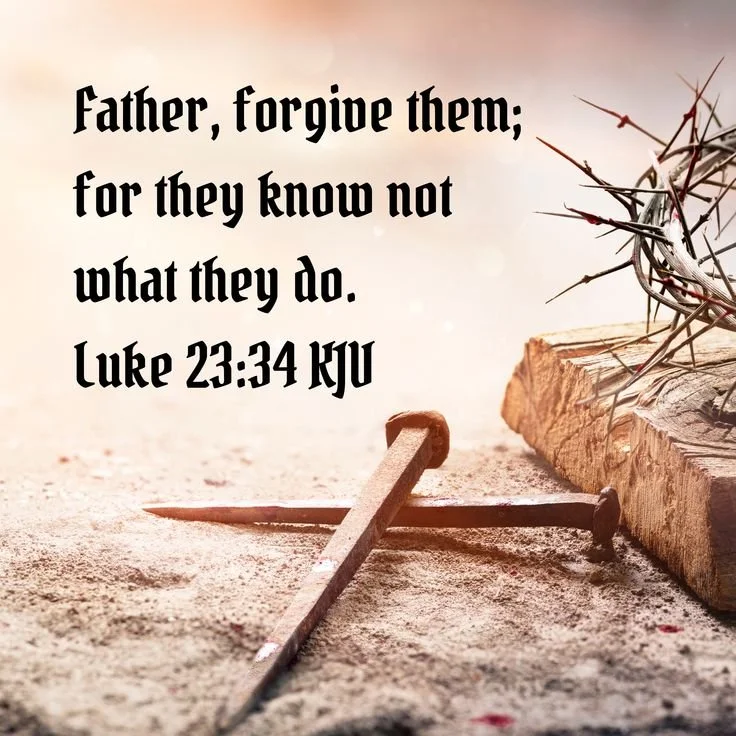
And yet—even in his dying, Jesus revealed something extraordinary. Not vengeance. Not despair. But forgiveness:

“Father, forgive them; they do not know what they are doing.”

“Today you will be with me in paradise.”

In these final words, we see the heart of His life’s message. Not that suffering is required—but that love remains possible, even in suffering. That forgiveness can rise, even in the face of violence.

Perhaps that is where the “good” begins to emerge.

Not in the death itself, but in the way He lived—and the way He died. A gentle life ended by violence. A life of love that refused to become hate, even at the end.

Good Friday may not be “good” in the way we often define it. But it is true. It reveals both the worst and the best of humanity. And it leaves us with a calling:

To live as He lived.
To love as He loved.
To become, in our own imperfect ways, embodiments of that same compassion and courage.

Maybe the only “necessity” in Good Friday is this stark contrast—between a life rooted in love and a death marked by violence.

And in that contrast, we are invited to choose again what kind of world we will help create.

-Sister Kathleen Lichti, CSJ

Image: Wim van 't Einde/Unsplash
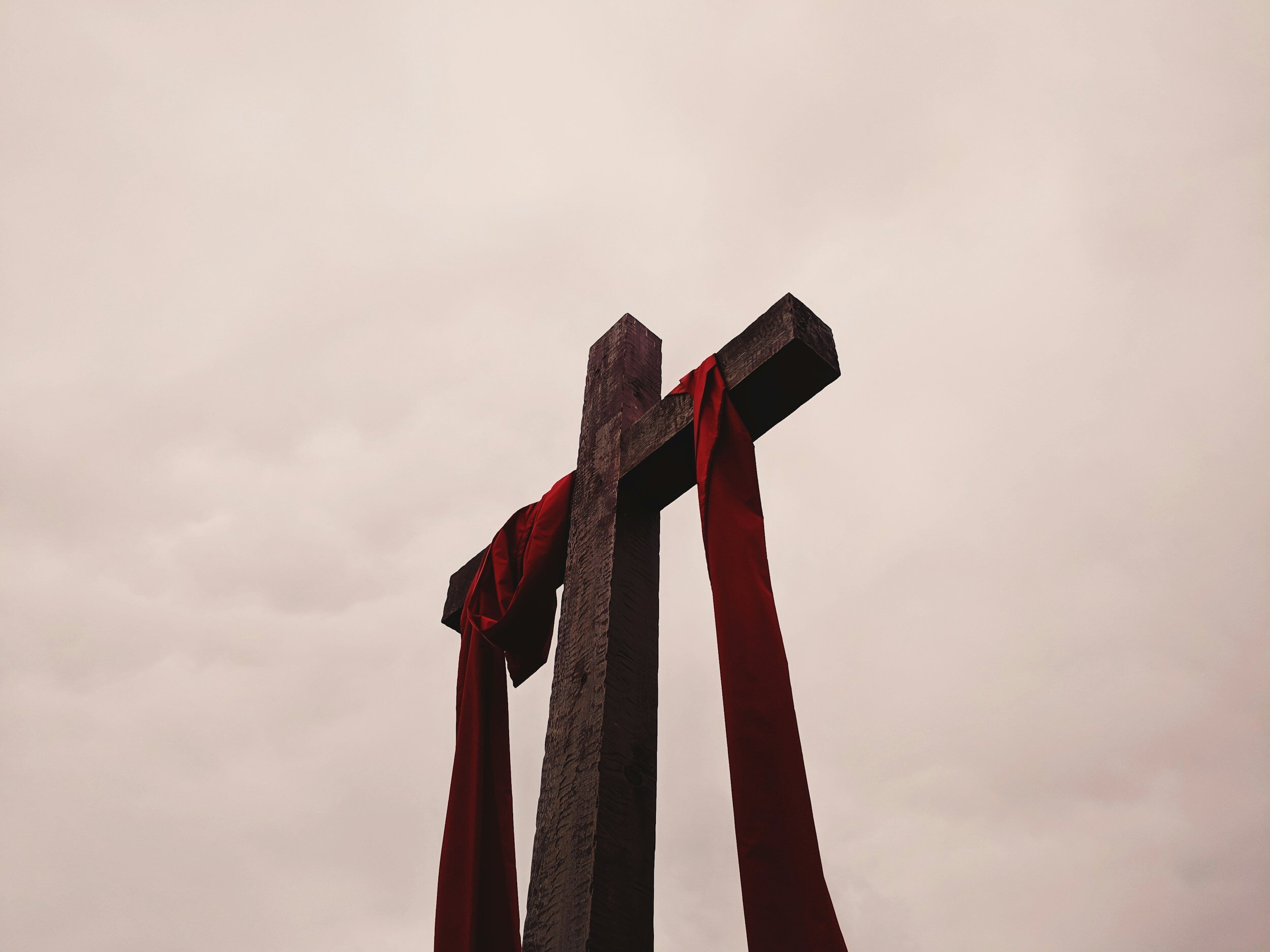
Good Friday

How dare we call this Good Friday! And yet we do. Why?

It is difficult to imagine the sadness and overwhelming grief of walking with a loved one through pain, suffering and death unless you have been there. Today as we walk with Jesus to Calvary, we may have some inkling of what the disciples were going through. This year, at this holiest of seasons, we have far too many clear pictures of innocent victims in so many nations around the world. Balancing our days by being lovingly aware and yet not crippled with grief is a challenge. Can we be brave enough to stand at the foot of their crosses in prayer and appropriate action with all these victims; or with one?

because we know the end of the story

Despite the agony of Jesus, His followers and now those who suffer in the name of “religion” find triumph in Jesus’ final message. We must not meet evil with evil but with love, compassion, and courage. Accept gratefully the graces of this season and move purposefully forward because we know the end of the story. I trust in Jesus’ message of hope.

-Maureen Condon, CSJ Associate

Image: Alicia Quan/Unsplash

Good Friday

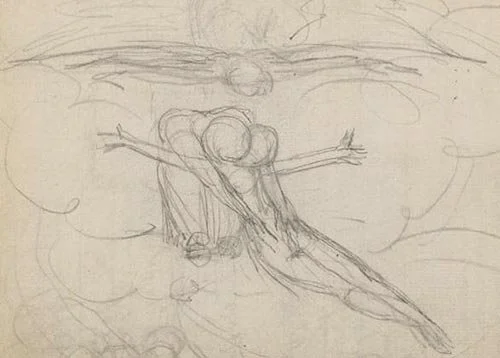
I was reflecting on what to write for a Good Friday blog and this image by William Blake kept coming to my mind. I have recently been reading Meister Eckhart’s Book of the Heart and his poem, Become Empty, also spoke to me in relation to Good Friday. I share both of these inspiring works as you, too, contemplate Good Friday and what it means for you.

Sister Ann MacDonald, CSJ

BECOME EMPTY
So you want to find God?
Empty yourself of everything -
your worries and your hopes,
your wishes and your fears.
For when you are finally
empty, God will find you,
because God cannot tolerate
emptiness and will come
to fill you with himself.
— Meister Eckhart

Header Image: Unsplash/Wim van 't Einde

Good Friday’s Reflection

Good Friday invites us to set aside our regular routines to enter a sacred time of quietness and reflection. Today beckons us to delve deeper into the depths of the unfathomable Paschal Mystery, the life, death and resurrection of Jesus. We are invited to see its sacred cycle inherent in the very pattern of our lives within our personal ups and downs. Our prayer seeks to draws us reverently into this mystery. The events of the Passion are an integrated segment of a whole: part of the unfolding mystery of God’s design. Thoughts can easily go awry if we too narrowly try to find the meaning of Jesus’ death apart from his ongoing incarnation and resurrection.

I propose that one might consider the writing style of Matthew, Mark and Luke akin to reporters of the daily news. Whereas, John’s approach more closely resembles the writing style of a documentary writer who wishes to convey to his audience a central message.

Sandra Schneider describes John’s central message in this manner:

“In the fourth gospel, events are not put forth in terms of sacrifice or retribution but in terms of self-gift: God so loved his own in the world that he laid down his life for them. Jesus’ self-gift was an act of friendship: “no longer do I call you servants…you I have called friends.” John’s gospel’s trilogy of –life, light, and love- captures [this] entire dynamic.”

In God’s unfolding design the Word became flesh and lived among us. Jesus graciously took upon himself all that human life entailed. Faithfulness to his mission and message brought him face to face with opposing forces. Opposition strong enough to demand a death sentence with capital punishment meted out in accordance with the methods of the day.   

We should not be too myopic in our view of Jesus’ death on the cross but see it in the context of Jesus’ whole life. Let us rather treasure the image of the crucified Jesus not as one defined moment, but as a sacrament of Jesus’ total life among us, Jesus’ fidelity to his mission without limiting the cost, and our example of a life of total self-gift.

Nancy Wales, CSJ