human rights

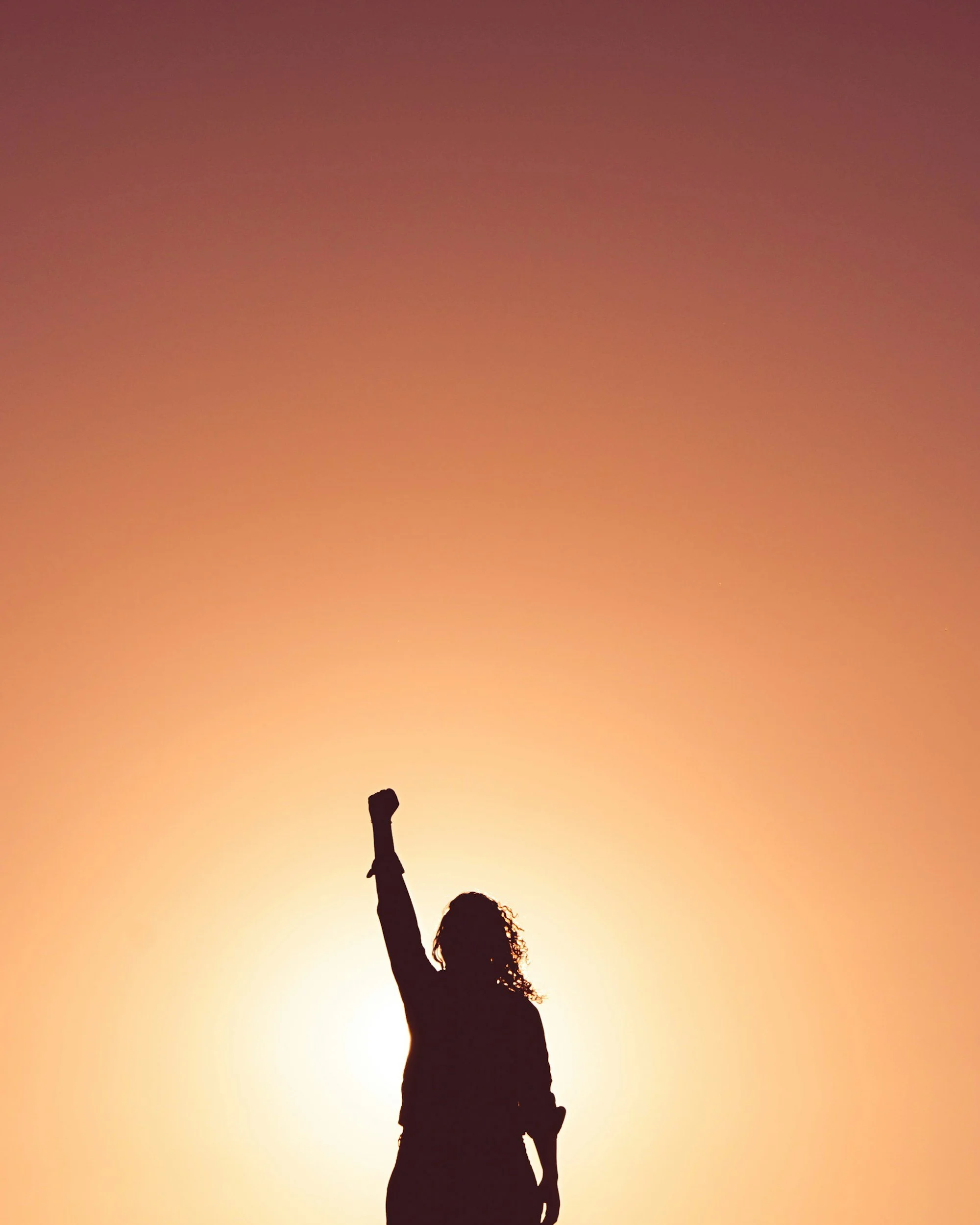
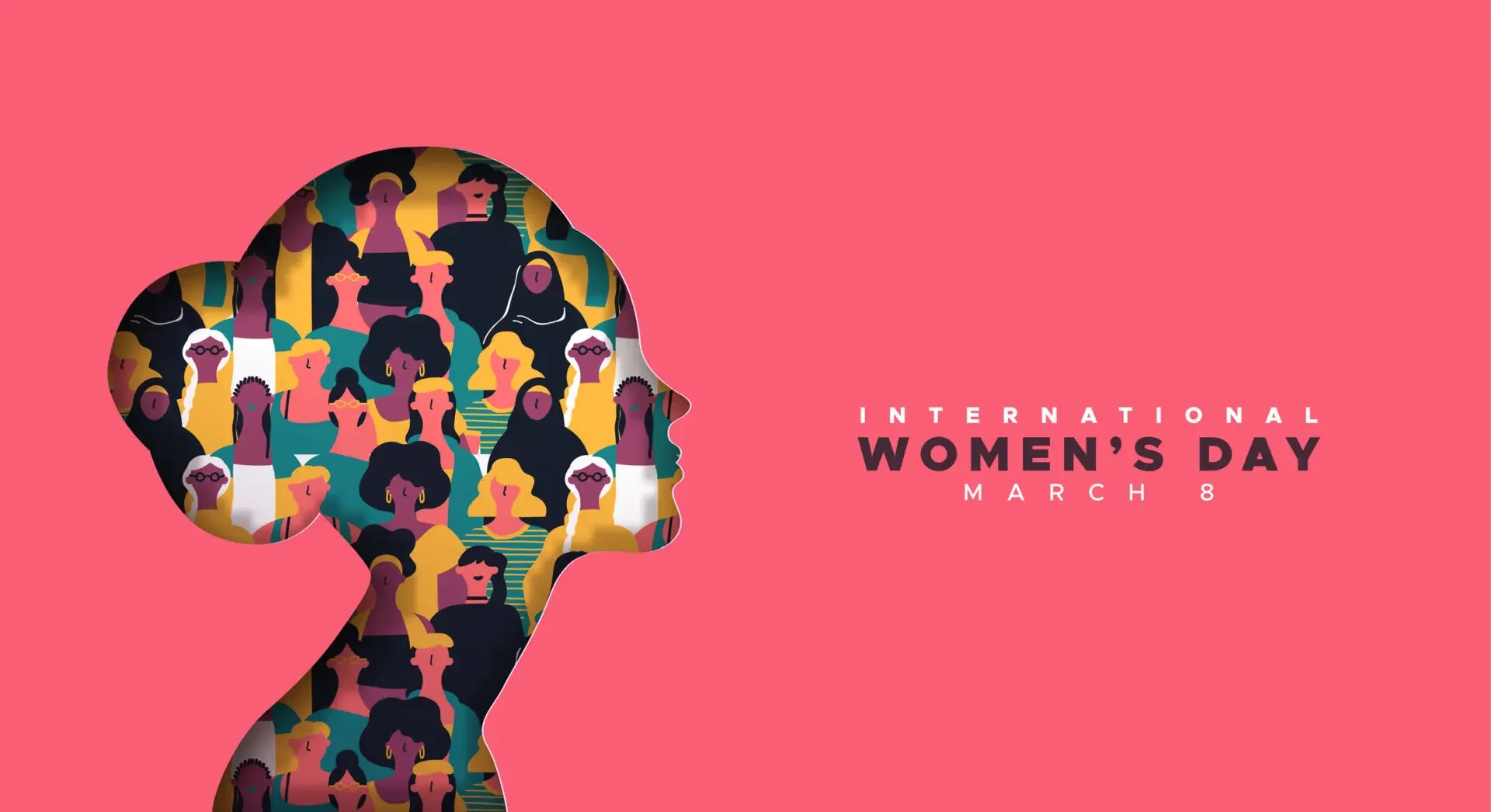
International Women’s Day: Honouring Resistance, Demanding Equality

Ketty Nivyabandi, Amnesty Int’l Canada [Photo Credit: Dave Chan]

As we approach International Women's Day, I am called to reflect on the extraordinary courage of women human rights defenders around the world who are leading, organizing, and resisting injustice in the face of unprecedented pressure and risk. Women like Yanar Mohammed, gunned down only last week outside her home in Baghdad.  

As authoritarian practices gain ground globally, we are facing a global, coordinated, and well-funded crackdown against hard-fought human rights gains. History reminds us that gendered violence has so often been used as a political tool to divide society and concentrate power.

Women who speak out face harassment, surveillance, detention and physical harm. Economic exclusion is used to limit their independence, and digital spaces are manipulated to silence their voices.

In Afghanistan, women have been systematically erased from public life. Girls who could attend school only a few years ago are now forbidden to do so. Women working to provide for their families and drive forward progress are now forced to remain at home, venturing out only when a male companion is present.

In Canada, the rights of Indigenous women to live in safety and raise families in traditional manners to keep cultures alive are threatened by apathy and antiquated laws designed to suppress their identities and rights. 

And yet—despite all such odds stacked against us—women remain the most integral of threads in the social, economic, cultural, and political fabric of life everywhere.

Women the world over are pushing the boundaries of what is acceptable. Of what we will tolerate.

In Ecuador, the Guerreras por la Amazonía remind us that women and girls of all ages are fierce defenders of their homes and communities. In Mexico, women have led the search for thousands of disappeared people and continue their pursuit for truth and justice, in the face of unrelenting threat.

I am firm believer in the power of women to reshape our world. To all the women across the globe fighting against immense odds to protect the rights of all, we salute your courage, but we do not salute it from the sidelines. We salute it in solidarity and action alongside you.

-Ketty | Ketty Nivyabandi is the Secretary General of Amnesty International Canada.

Image: Unsplash

Labour Day: Imagining a New Kind of Economy

As Labour Day rolls around once again, there’s a different feeling in the air. For many workers, wages haven’t kept up with inflation. There’s a growing sense that workers have been pushed to the brink and they’re ready to stand together for a fair deal. For some that has meant strikes; for others, tough negotiating. Slowly, progress is being made.   

But a recent article, by a former grocery-store worker, puts this progress in context. The article makes the point that there was a time when a person could build a solid career out of a full-time job at a grocery store. There were benefits, a pension, and a wage that would be about $46/hr in today’s dollars. Cashiers and clerks started at a wage that was triple the minimum wage. 

Today, we can’t imagine such a thing. That’s how far removed from decent work our economy has become.  It’s not that grocery stores are making less profit. In the quarter  that ended July 1, Metro announced that net earnings increased 26 per cent to $346.7 million from $275 million during the same quarter a year earlier. That’s profit.  Yes, their costs went up, but their revenues increased at the same time, ensuring these huge profits.

And, of course, it’s not just Metro. And it’s not just grocery stores. Profits don’t trickle down to workers; they flow to shareholders through increased dividends and buybacks.  It’s how the system works.

Profits don’t trickle down to workers; they flow to shareholders through increased dividends and buybacks.  It’s how the system works.

As we celebrate Labour Day, let’s also begin to imagine a new kind of economy. What about an Economy of Solidarity?  An economy grounded in human rights and care for the earth and all earth’s inhabitants. 

If we learn to stand together, we could make it happen.

-Sister Sue Wilson, CSJ

Water as a Human Right: water access is divided both locally and globally

As a Blue Community, the Sisters of St. Joseph are raising their awareness about who has clean water and who does not. Social and political inequities are magnified by water. Even though water is foundational to life, it remains exclusive based on wealth and white privilege. Let’s look at this issue for Canada, the Great Lakes, and globally to understand why this the human right to water matters and how we can collectively ensure that everyone has water for drinking and sanitation.

Canada is blessed with over 20% of the world’s freshwater. Accessible freshwater (not frozen in glaciers) makes up less than 1% of all water on mother earth. Zooming into a map of Canada reveals a vast network of water arteries feeding all life in its path. Canada is also one of the richest countries in the world. Ranked #38 for population (almost 37 million people) we rank #8 for top wealth (with 6.4 trillion in wealth). Yet too many people here go without clean water.


The image left is a crisis map. In Ontario alone, there are 80 First Nations living with a Drinking Water Advisory (DWA). These DWAs are a combination of Boil Water advisories, Do Not Consume advisories, and Do Not Use advisories (read about the differences). Based on Canada’s wealth, it’s hard to believe that some people in Canada can not do what most take for granted – turning on the taps with trust. This is not a recent crisis. Some First Nations have not had access to clean water for decades.

Canada does not have consistent and enforceable drinking water standards. Those not living on a First Nation reserve have Provincial water rules and layers of government infrastructure support. First Nations fall under the jurisdiction of the Ministry of Indian Affairs and Northern Development and this Federal support is chronically neglected. On March 22, 2016 (auspiciously World Water Day) new Prime Minister Justin Trudeau announced $4.6 billion for new infrastructure in Indigenous communities over the next five years. This includes money for water and wastewater systems. This Human Rights Watch article explains the issues and comments more. The Trudeau government has promised to end all DWAs, but the progress has been flat and The Parliamentary Budget Officer has estimated that this spending meets only 70% of the total amount required.

The David Suzuki Foundation and the Council of Canadians put out a report called Glass Half Full to evaluate the Trudeau promise. Not only is this Federal promise far from being on track, there are increased fears of the funding gap being closed by water privatization. One way to monitor the updates is by visiting the Water Today maps. Here is a sample of current DWAs for southern Ontario:


Ecojustice has also researched this human rights crisis and makes the following observation:
Being unable to use the water in your home isn’t simply an inconvenience, it is something that poses a serious threat to one’s health and quality of life. Studies have shown that communities that lack access to safe, clean drinking water face significant health risks, including elevated rates of waterborne illnesses, pneumonia, influenza, whooping cough, and other infections. The long history of the drinking water crisis in Indigenous communities is an egregious injustice, and the fact that it has gone unaddressed for so long is unacceptable.

It serves to perpetuate and contribute to existing disadvantages faced by Indigenous peoples in this country due to the ongoing effects of colonialism and systemic racism.

The Council of Canadians is leading a Water Drop letter-writing campaign. Print off this letter template in the shape of a water drop and tell PM Trudeau to keep his promise. Our Federation’s Congregations also call the Great Lakes watershed home. We live, pray, and serve within lakes Superior, Huron, Erie, and Ontario. But some of our water neighbours in the United States are denied water because of price, pollution, and systemic discrimination.


From 2014 to 2017, over 100,000 homes have been denied water. Daily acts of refreshment, sanitation, and feeding are denied because of unaffordable water bills.

Earlier this year, Detroit's Water and Sewerage Department began turning off water utilities for overdue or delinquent accounts. Since April, the department has cut off the water for nearly 3,000 households per week — meaning roughly 100,000 Motor City residents are without water. Entrenched at the bottom of Detroit's current economic crisis, many of those without water are the city's poorest resident. The city’s shut-off campaign has garnered international press attention, and has been called “an affront to human rights” by representatives of the United Nations. VICE News traveled to Detroit to see first-hand how residents are dealing with the water shut-offs, speak with local government representatives about the issue, and discuss possible resolutions with activist groups. Watch the video here


In Detroit, a Great Lakes city bordering 20% of the earth’s 1% freshwater, hundreds of thousands of people are having their water and rights taken away because the City is drowning in a confluence of municipal, racial, and wealth issues. Once servicing 2 million people, the flight of manufacturing jobs has depopulated the city down to 700,000 people. Not only are these remaining people the ones less willing and able to leave, they now have to pay for that major waterworks system with their minor funds. People have to choose between buying food and buying water.


Combined with systemic racism and water privatization, downtown residents pay some of the highest water utility bills in the USA even though they are some of the poorest people in the country. People are fighting back. Detroit’s People’s Water Board Coalition is just one of many groups coordinating water access, policy change, political accountability, and community action.

Hear more voices affected by these shut-offs. Before the crisis, one woman was paying $60 for three months. Now she needs to pay $100 for one month.
But it’s not just Detroit in crisis. Over 5,000 children in Flint Michigan have been poisoned with lead in their water. This 2011 -- 2017 CNN timeline describes the series of system failures that switched Flint’s drinking water source, ignored public alerts, sacrificed human health, and still demands people to pay for their poisoned water. This on-going struggle for clean water also impacts people’s heath and trust in public institutions -- impacts that will last decades.

This CBC report shows the personal and political affects.

A recent Michigan Civil Rights Commission report concluded that “decisions would have been different had they concerned the state’s wealthier, predominantly white communities.” This same Toronto Star article reported that:

“Flint resident Claire McClinton said she’s grateful for the efforts but finds the report “underwhelming.” She said the emergency manager law needs to be abolished, the Army Corps of Engineers should replace the old pipes, and Medicare needs to be made available to “all impacted residents.”

At a water justice gathering in the Fall of 2017, McClinton said, “In Flint Michigan, you can buy a gallon of lead free gas, or a gallon of lead free paint, but you can’t get a gallon of lead free water from your own tap.
The human right to clean water is also a global issue. In 2010, the United Nations agreed that clean water and sanitation is a human right. The infographic below helps tell the story with 2.6 billion people denied basic sanitation and 884 million people without clean drinking water. 


This Circle of Blue map shows where the human right to water is most critical.

In 2010 the United Nations General Assembly passed a resolution that affirms the human right to clean water and basic sanitation. After originally abstaining from this vote, Canada agreed to this resolution in 2012. According to the Safe Drinking Water Foundation:

The government is obliged to ensure that people can enjoy their basic human rights. There are three levels of obligation. First, the government must respect the right, and not do anything to interfere with the right. In the case of drinking water, this means that the government cannot deny anyone access to safe drinking water.

The second level of the government’s duty is to protect the right, by preventing third party interference. For drinking water, this may involve the establishment of legislation that prohibits manufacturing companies from polluting drinking water.

The third level of obligation is to fulfill the right, when necessary. In the case of drinking water, this may require the government to establish a water treatment plant or construct wells to provide safe drinking water.

What does this issue obligate you to do? How can we amplify this human rights message to a wider audience? - Paul Bain c/o Blue Communities Now 


Bringing human rights into the divisive niqab debate

From a human rights perspective a particularly troubling side of the recent federal election was the heated discussion that arose about the niqab.  Now that the election is over it is time to put the ugliness of that divisive and toxic debate behind us and ensure that we move forward with messages and an approach that are inclusive, respectful and grounded in rights.

The debate arose because one woman who has chosen to wear the niqab challenged a policy brought in by former Minister of Immigration Jason Kenney which would have required her to remove her niqab face covering during her citizenship ceremony.  Zunera Ishaq did not object to being required to reveal her face privately to female officials in advance of the ceremony, to verify her identity.  But she felt that being required to remove the veil in public during the subsequent ceremony ran contrary to her religious beliefs.

In February 2015 the Federal Court ruled in Ms. Ishaq’s favour, overturning the government’s policy.  The government appealed to the Federal Court of Appeal.  The appeal was heard and judgement rendered on the spot on September 15th in the midst of the election campaign. The three judge appeal  panel unanimously and immediately sided with Ms. Ishaq; that is how clear the legal issues are in the case. 

The government announced a further appeal attempt, on to the Supreme Court of Canada.  Recognizing that the appeal would not be heard before Election Day government lawyers were instructed to ask the Federal Court of Appeal to puts its ruling on hold until the matter was dealt with by the Supreme Court.  The Federal Court of Appeal refused to do so, recognizing that Ms. Ishaq’s need to obtain citizenship in time to vote was of fundamental importance and there was no countervailing and compelling government interest in delay.

What was so deeply troubling was the extent to which Ms. Ishaq’s case was then used for poisonous political advantage.  Politicians, particularly in Quebec, used it directly and indirectly to fan flames of xenophobia, including in the leaders debate.  And with that move, a group that already faces considerable marginalization and disenfranchisement suddenly faced even greater stigmatisation and derision.

The niqab is a form of dress adopted by some Muslim women which includes a face veil which only leaves an opening for a woman’s eyes.  In some parts of the world governments and religious authorities force women to wear the niqab and refusal to comply can be met with severe penalties.

The human rights response to the niqab is clear.  No government anywhere is allowed to impose laws or poliicies requiring women and girls to wear it (or any other mandated dress code that has no legitimate basis in health or safety).  But similarly no government is allowed to prohibit women and girls from wearing the niqab (or ban other forms of dress, again absent security or safety concerns).  The human rights side of this debate is so clear it is no surprise that court rulings have been quick, unanimous and always in Ms. Ishaq’s favour.  Important rights to free expression, freedom of religion and women’s equality are on the line.

Clearly many Canadians are troubled by and feel uncomfortable with the niqab. Many see it as a symbol of women’s oppression.  But that discomfort or personal perceptions about the niqab do not change the fundamental human rights equation:  governments are not allowed to force or prohibit any particular form of dress.   

What also came out during the recent debate is the degree to which misunderstandings and stereotypes about the women who wear the niqab prevail, largely on the basis of assumptions.  Ms. Ishaq herself made it clear that wearing it was her own personal choice and that both her father and her husband had in fact discouraged or questioned her decision.  What that reminds us is that clearly the motivation and personal experiences of the women behind the veil differ considerably. Some feel forced and with no choice.  Others compelled to follow a sense of duty.  Some see it as tradition.  Others may feel more comfortable and at ease when they wear it.

A remarkable group of over 500 Canadian women leaders from such fields as law, politics, business, the arts, civil society and religious life came forward during the final days of the recent election and released a statement calling for respect and rights to prevail in the niqab debate. That statement noted with concern that the discussion to date has been marked by talking about the women most directly implicated and that it was time, instead, to talk with them.   How true that is.  It is quite astounding that the majority of the loudest voices in recent weeks, on both sides of the debate, have been men.  Women, let alone women who wear or who have made the decision not to wear the niqab, have been relegated to the sidelines.

This debate is not over.  For instance, there is proposed provincial legislation pending in Quebec which might prohibit women wearing the niqab from working as public servants.

We cannot and should not shut down that debate. But we can work to ensure that it takes on a tone of inclusion, not exclusion; builds understanding, not misconceptions; and is focused on rights, not punishment.

Guest Blogger:


Alex Neve
Secretary General
Amnesty International Canada
Using Our Global CSJ Voice

The Federation of the Sisters of St. Joseph of Canada is leading the global voice of Sisters of St. Joseph throughout the world to send an urgent message to the United Nation’s Commission for Social  Development’s 53rd Session Feb. 4-13, 2015. Their message presses the commission to consider priorities in “strengthening social development in the contemporary world”. It also calls upon the commission to enact policies that create comprehensive protection of the rights of all migrants.

The Sisters’ statement, “The Overview to the Statement on Migration to the United Nations” cites Article 2 of the “Universal Declaration of Human Rights”:  “Everyone is entitled to all the rights and freedoms set forth in this Declaration without distinction of any kind”.  Concerning this claim, the submission points out, “Such rights are only as strong as the commitments of governments to uphold them, and the Congregations of the Sisters of St. Joseph are disturbed by practices and policies that weaken these rights in the countries where we live and work. This pattern is particularly evident with regard to rights that apply to migrants and refugees”.

The submission also outlines concerns with a host of other social problems, including refugee resettlement, human trafficking, climate change and the politics of xenophobia.

Sr. Sue Wilson, is the director for the Federation of the Sisters of St.  Joseph of Canada Office for Systemic Justice and principal writer of the statement that was submitted to the United Nations. The submission represents over 10,000 CSJ Sisters in 49 countries of the 6 continents in the world. The Congregations of St. Joseph are a Non-Governmental Organization with General Consultative Status with the Economic and Social Council at the United Nations.

With the UN’s endorsement through the Commission, of the  Sisters’ plea for a fair and just interpretation of refugee rights and the rights of so many other marginalized people, the Sisters hope that all levels of government as well as ordinary citizens will again embrace their responsibility to love and assist the dear neighbor in need.

Click on link to read more: “St. Joe’s Sisters spearhead call to protect migrants

Jean Moylan CSJ